
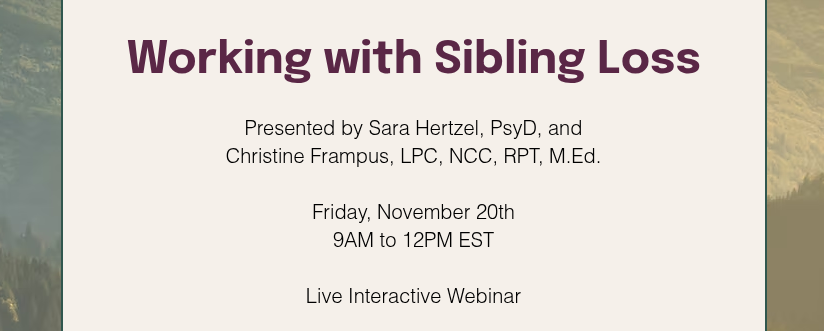
Working with Sibling Loss
Dr. Sara Hertzl; Christine Frampus, PsyD; LPC, NCC, RPT
About this training
The sibling relationship is a particularly unique relationship that is expected to last a lifetime. This assumption is shattered for many people (5-8% of people before the age of 25). Research shows that people spend 80-100% of their lifetime with their sibling. The trauma of sibling loss is associated with specific biological, psychological, and social impacts that vary by the surviving siblings’ age at the time of their loss. Regardless of age, siblings are often referred to as, “the forgotten mourner,” due to their being subject to disenfranchised grief. As a result of disenfranchised grief, siblings are positioned in ways that lack, or at least present a barrier to access to help and support. The disenfranchisement experienced by sibling loss survivors is associated with feelings of loneliness, confusion, emotional neglect, diminished coping capacity and persistent distress. Given these risk factors, it is critical that psychologists and other mental health professionals understand the specific psychological sequelae that accompanies sibling loss in order to competently assess and treat challenges that may arise as a result of sibling loss. Hertzel Psych, PLLC is approved by the American Psychological Association to sponsor continuing education for psychologists. Hertzel Psych, PLLC, maintains responsibility for this program and its content. Hertzel Psych, PLLC has been approved by NBCC as an Approved Continuing Education Provider, ACEP No. 7954. Programs that do not qualify for NBCC credit are clearly identified. Hertzel Psych, PLLC is solely responsible for all aspects of the programs.
CE credits: 3 · APA, NBCC